
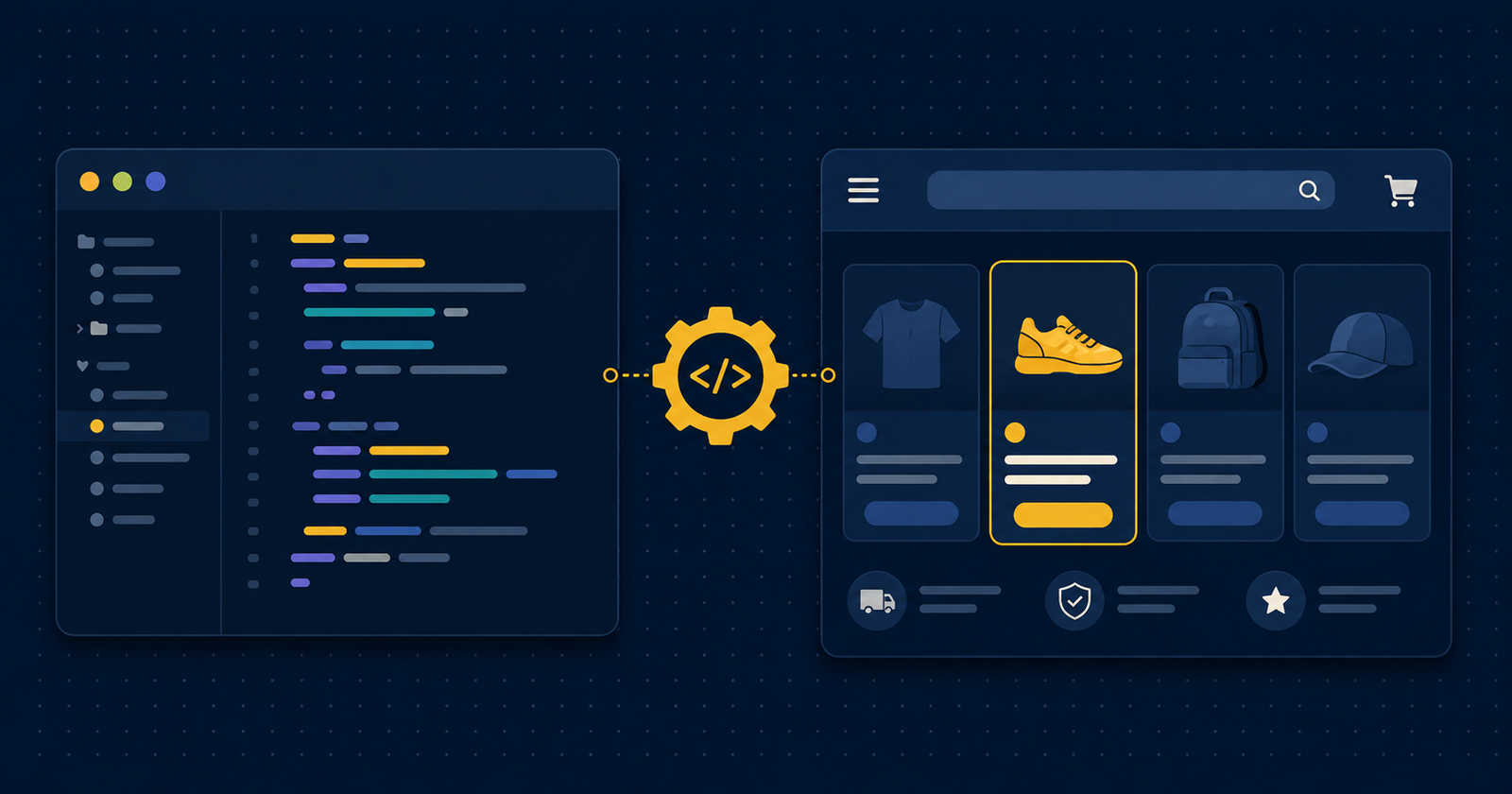
Why E-commerce SEO Needs a Developer, Not Just a Strategist
A lot of e-commerce SEO advice stops at strategy: target these keywords, write this meta description, build these backlinks. That advice is correct, but on most e-commerce platforms, the biggest wins and the biggest risks live somewhere strategy alone can’t reach — in the code.
Where Development Skills Actually Matter
Faceted navigation and duplicate content
Filter combinations (size, color, price range) on a category page can generate thousands of near-duplicate URLs if they’re not handled correctly. Fixing this requires understanding canonical tags, robots directives, and how the platform’s routing actually works — not just knowing that duplicate content is bad. This is exactly the kind of large, frequently-changing URL structure I worked through at Mzad Qatar’s marketplace.
Page speed on product and category templates
E-commerce templates are often loaded with third-party scripts — reviews widgets, upsell apps, tracking pixels — that strategists can flag but usually can’t fix. Actually improving Core Web Vitals means knowing how to defer scripts, optimize images at the template level, and reduce render-blocking resources.
Structured data for products
Product schema (price, availability, review ratings) is what earns rich results in search — but implementing it correctly, especially at scale across thousands of SKUs, is a templating problem, not a content problem. It’s the same structured-data mindset covered in optimizing for AI search.
Out-of-stock and discontinued product handling
What happens to a product page’s URL when the item is discontinued matters a lot for SEO — a broken 404 wastes accumulated authority, while a thoughtful redirect or “similar products” page preserves it. This is a decision that has to be built into the platform, not bolted on after the fact.
The Case for a Hybrid Skill Set
None of this means strategists aren’t valuable — keyword research, content planning, and competitive analysis still require that expertise. But on e-commerce sites specifically, the distance between “here’s what should change” and “here’s the fix, deployed” is often the difference between a recommendation that sits in a backlog for six months and one that ships this week.
The Practical Upshot
If your SEO reports keep flagging the same technical issues quarter after quarter, the bottleneck usually isn’t the strategy — it’s the handoff to development. Closing that gap, whether by hiring a hybrid skill set or building a tighter working relationship between your SEO and dev teams, tends to be the highest-leverage fix available.
Have a catalog with recurring technical SEO issues? Get in touch, or see how I approach technical and e-commerce SEO.