
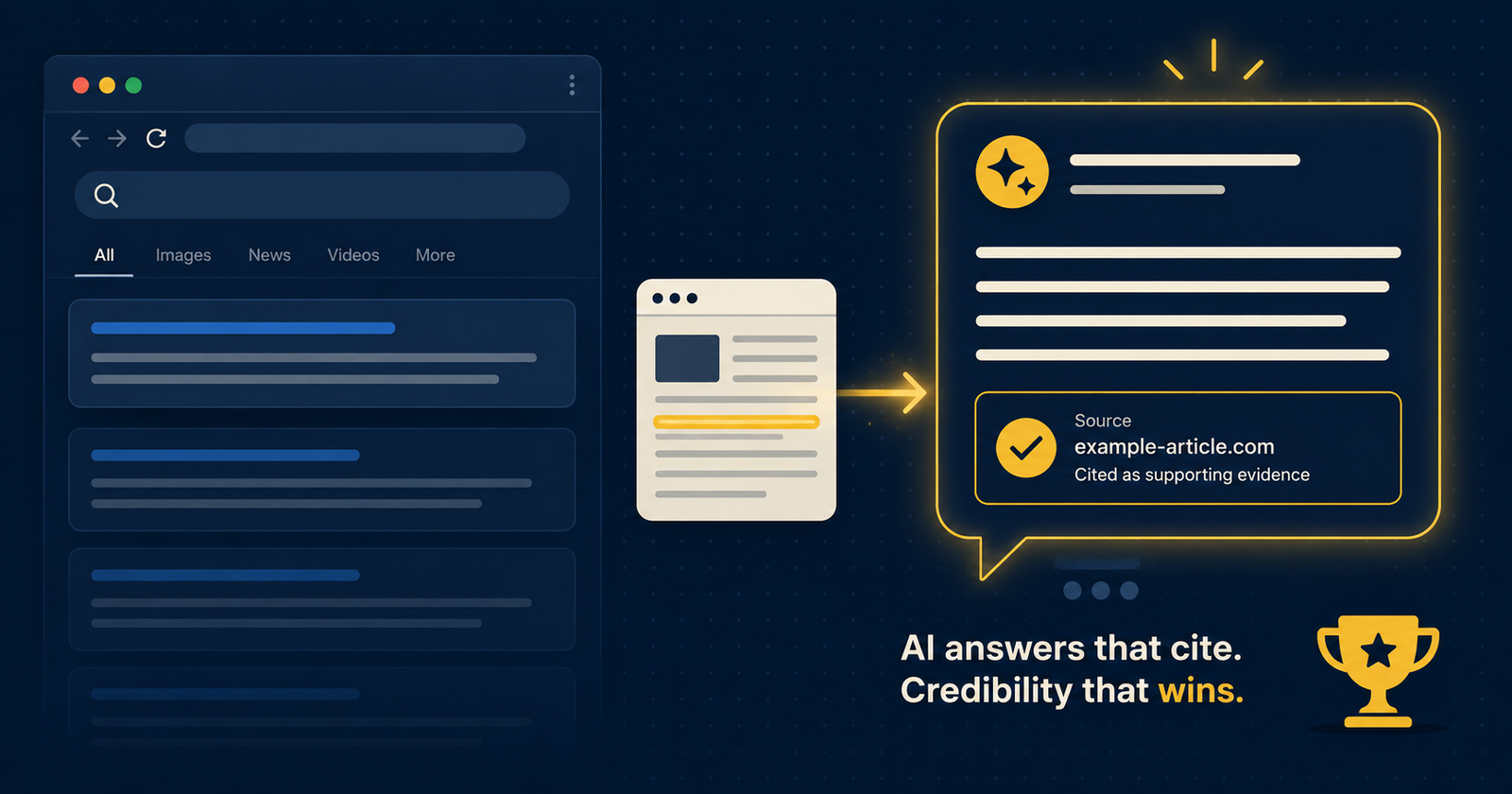
AEO vs. Traditional SEO: How to Optimize for AI-Powered Search
For years, SEO meant one thing: get a blue link onto page one of Google. That’s still part of the job, but it’s no longer the whole job. AI Overviews, ChatGPT, Perplexity, and voice assistants are increasingly answering questions directly, without sending a click to any website at all. That shift is what people mean when they talk about AEO — Answer Engine Optimization.
What AEO Actually Means
AEO is the practice of structuring content so AI systems can easily extract, understand, and cite it as a source when generating an answer. It’s not a replacement for SEO — it’s an extension of it. The technical foundations (crawlability, page speed, clean HTML, authoritative content) still matter just as much. What changes is how you present information on the page.
Three Differences That Actually Matter
1. Answer the question in the first two sentences
Traditional SEO content often builds up to an answer with context, backstory, and a keyword-rich introduction. AI systems extracting content for a direct answer don’t have the patience for that. Put the direct answer near the top, then expand with detail and nuance afterward.
2. Structure content so it’s easy to lift
Short paragraphs, clear headings that mirror real questions, and well-formatted lists all make it easier for a language model to pull an accurate excerpt. Walls of unstructured text are harder to summarize correctly — and more likely to get skipped in favor of a competitor’s cleaner page.
3. Structured data is doing more work than before
Schema markup — FAQ schema, HowTo schema, Article schema — helps both traditional search engines and AI crawlers understand exactly what a piece of content is and how its parts relate to each other. It’s cheap to implement and increasingly worth the effort.
What Stays the Same
AEO doesn’t replace the fundamentals. Fast-loading pages, solid internal linking, accurate metadata, and genuinely useful content are still what earn trust — from both search engines and the AI systems built on top of them. Optimizing for AI answers without those fundamentals in place is optimizing on sand. The same discipline applies whether you’re working on local SEO or a large e-commerce catalog.
The Practical Takeaway
If you’re already doing SEO well, AEO isn’t a separate project — it’s a formatting and structuring discipline layered on top. Start with your highest-traffic pages: tighten the opening paragraph so it directly answers the implied question, break up dense sections, and add schema where it’s missing. Small, targeted changes here tend to compound.
Want a second pair of eyes on how your site handles this? Get in touch, or see how I approach SEO and AEO work.